


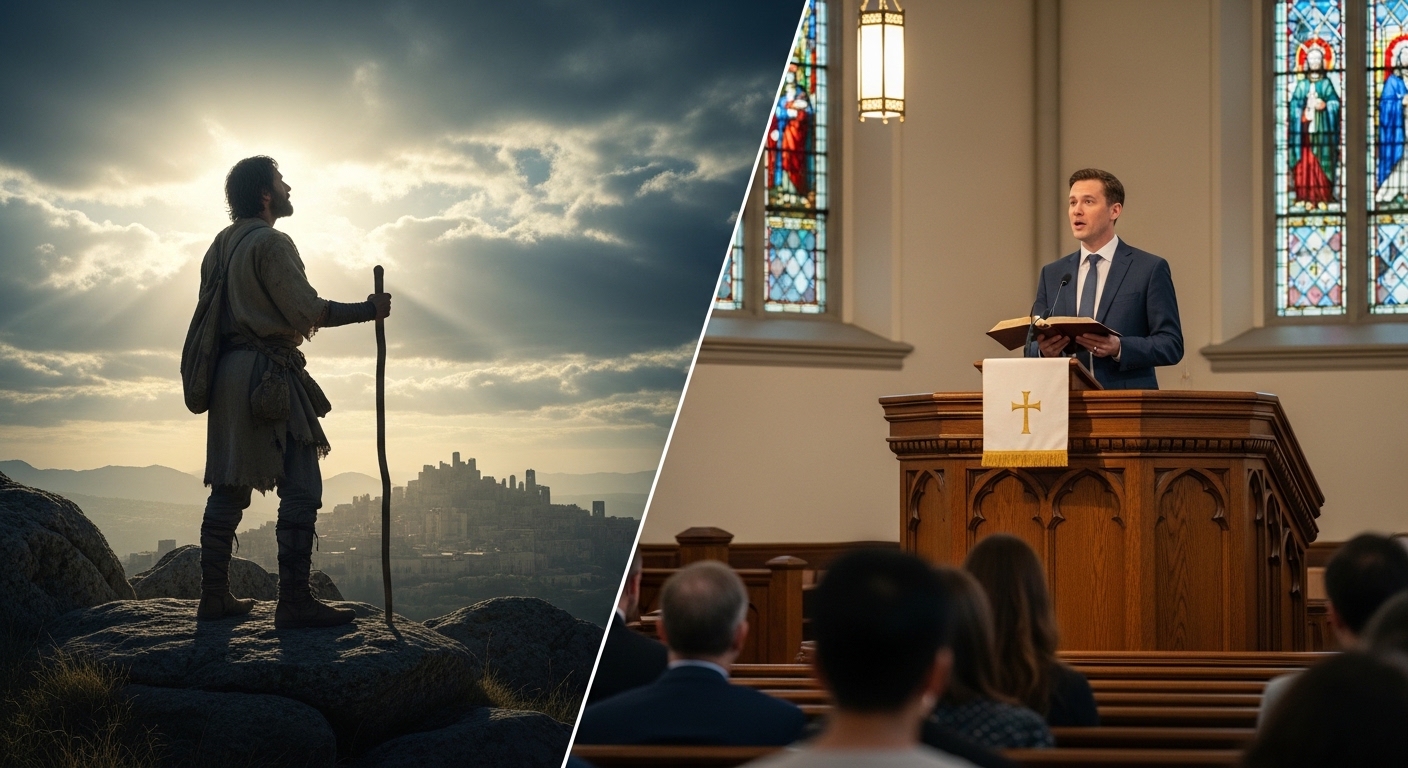
In today’s church landscape, the terms “prophet” and “pastor” are frequently used, sometimes interchangeably, leading to confusion about their distinct biblical roles. Understanding the difference between a prophet and a pastor is crucial for recognizing God’s ordained leadership structure and appreciating how each office functions within the body of Christ. Both are divinely appointed positions mentioned in Ephesians 4:11 as part of the five-fold ministry, yet they serve fundamentally different purposes in building God’s kingdom.
This comprehensive guide explores the biblical distinctions between these two vital ministry offices, examining their calling, authority, responsibilities, and how they complement each other in fulfilling God’s purposes for His church.
Biblical Foundation: The Five-Fold Ministry
Before examining the specific differences, we must understand where prophets and pastors fit in God’s overall plan for church leadership.
Ephesians 4:11-13 (NIV):
“So Christ himself gave the apostles, the prophets, the evangelists, the pastors and teachers, to equip his people for works of service, so that the body of Christ may be built up until we all reach unity in the faith and in the knowledge of the Son of God and become mature, attaining to the whole measure of the fullness of Christ.”
The five ministry offices are:
- Apostles – Sent ones who establish churches and oversee regions
- Prophets – Speak God’s present word and future direction
- Evangelists – Preach the gospel and win souls
- Pastors – Shepherd and care for God’s flock
- Teachers – Explain and clarify biblical doctrine
Each office has distinct functions, though they work together harmoniously to build up the body of Christ. The prophet and pastor, while both essential, operate from fundamentally different mandates.
What Is a Prophet?
Biblical Definition
A prophet is someone called by God to speak His present word, reveal His mind, provide direction, and sometimes foretell future events. The Greek word “prophētēs” means “one who speaks forth” or “proclaimer of a divine message.”
Primary Function
Speaking God’s Now Word:
Prophets deliver timely messages directly from God’s heart for specific situations, people, or seasons. While pastors teach biblical principles, prophets speak what God is saying right now about present circumstances.
Revelation Ministry:
Prophets operate in the supernatural realm of revelation, receiving insight, visions, dreams, and divine knowledge that natural wisdom cannot access. They see beyond the natural into spiritual realities.
Directional Guidance:
Prophets provide strategic direction for individuals, churches, and nations based on divine revelation. They often redirect God’s people when they’ve strayed from His path.
Biblical Examples
Old Testament Prophets:
- Moses – Spoke God’s word to Pharaoh and Israel, delivered the law
- Elijah – Confronted idolatry, called down fire from heaven
- Isaiah – Prophesied about the coming Messiah centuries before His birth
- Jeremiah – Warned Judah about coming judgment
- Daniel – Interpreted dreams and received apocalyptic visions
New Testament Prophets:
- Agabus – Prophesied famine and Paul’s imprisonment (Acts 11:28, 21:10-11)
- Anna – Prophetess who recognized baby Jesus as Messiah (Luke 2:36-38)
- Philip’s daughters – Four virgin daughters who prophesied (Acts 21:9)
- Judas and Silas – Prophets who encouraged and strengthened believers (Acts 15:32)
Characteristics of Prophetic Ministry
1. Divine Calling:
Prophets don’t choose their office—God sovereignly selects and appoints them. Many prophets, like Jeremiah and Jonah, initially resisted their calling because of its weight and cost.
2. Revelatory Nature:
Prophets receive supernatural insight through visions, dreams, angelic visitations, audible voice of God, or inner knowing. They see and hear what others cannot.
3. Confrontational Edge:
True prophets often deliver uncomfortable messages that challenge status quo, expose sin, and call for repentance. They prioritize God’s truth over human approval.
4. Operates Beyond Local Church:
While some prophets serve locally, the prophetic office often extends beyond one congregation to serve cities, regions, or nations.
5. Intermittent Ministry:
Prophets typically minister as the Spirit leads rather than on a fixed schedule. Their word comes “in season” for specific purposes.
What Is a Pastor?
Biblical Definition
A pastor is a shepherd called by God to feed, protect, guide, and care for a specific flock of believers. The Greek word “poimēn” literally means “shepherd,” emphasizing the pastoral nature of this role.
Primary Function
Shepherding God’s Flock:
Pastors provide ongoing spiritual care, nurturing believers through teaching, counseling, and personal discipleship. They know their sheep by name and attend to individual needs.
Teaching and Feeding:
Pastors regularly teach the Word of God, ensuring their congregation understands biblical doctrine, principles, and practical Christian living.
Protection:
Pastors guard their flock from false doctrine, spiritual attacks, and influences that could harm believers spiritually, emotionally, or morally.
Biblical Foundation
Jesus as the Chief Shepherd:
Jesus called Himself the Good Shepherd (John 10:11) and demonstrated pastoral care through His ministry. All human pastors serve under His authority and model.
Peter’s Commission:
After His resurrection, Jesus commissioned Peter three times: “Feed my lambs… Take care of my sheep… Feed my sheep” (John 21:15-17), establishing the pastoral mandate.
Paul’s Instructions:
Paul told the Ephesian elders to “Be shepherds of the church of God, which he bought with his own blood” (Acts 20:28), emphasizing the sacred trust of pastoral oversight.
Biblical Examples
Old Testament Shepherding:
- David – Shepherd boy who became shepherd-king, wrote Psalm 23 about God as Shepherd
- Moses – Led Israel for 40 years, providing daily guidance and care
- Ezekiel – Prophesied against negligent shepherds who failed to care for God’s flock (Ezekiel 34)
New Testament Pastoral Ministry:
- James – Pastor of Jerusalem church, provided steady leadership
- Timothy – Young pastor mentored by Paul, given charge of Ephesian church
- Titus – Left in Crete to establish leadership and order churches
- Peter – Pastored early believers while also exercising apostolic authority
Characteristics of Pastoral Ministry
1. Consistent Presence:
Unlike prophets who may minister intermittently, pastors maintain steady, ongoing relationship with their congregation. They’re available for crises, celebrations, and everyday spiritual needs.
2. Relational Focus:
Pastors build deep, long-term relationships with congregants. They know family situations, personal struggles, and individual spiritual journeys.
3. Teaching Emphasis:
While pastors may operate prophetically occasionally, their primary function is teaching the full counsel of God systematically rather than delivering spontaneous prophetic words.
4. Local Church Commitment:
Pastors are called to specific congregations and geographic locations. Their mandate is defined by the flock entrusted to their care.
5. Administrative Responsibility:
Pastors oversee church operations, make decisions about programs, manage staff, and ensure smooth organizational functioning—responsibilities prophets typically don’t carry.
Key Differences: Prophet vs Pastor
1. Primary Ministry Focus
Prophet:
- Speaks God’s present word for specific situations
- Operates in revelation and supernatural insight
- Provides directional guidance and course correction
- Prophesies about future events and seasons
- Exposes hidden sin and calls for repentance
Pastor:
- Teaches God’s written Word systematically
- Operates in wisdom, knowledge, and practical application
- Provides consistent spiritual nurture and care
- Focuses on present spiritual growth and maturity
- Counsels, encourages, and supports through life challenges
2. Relationship to the Flock
Prophet:
- May minister to people they don’t know personally
- Typically has brief, intense encounters
- Speaks God’s word then moves on
- Not responsible for ongoing care of those prophesied to
- Operates more in moments than in processes
Pastor:
- Knows congregation intimately and personally
- Maintains long-term, sustained relationships
- Walks with people through entire spiritual journeys
- Responsible for ongoing spiritual welfare of the flock
- Operates in continuous shepherding processes
3. Source of Message
Prophet:
- Receives spontaneous revelation from God
- Speaks what God shows them in visions, dreams, or inner witness
- Message often comes “out of season” or unexpectedly
- May not fully understand what they’re prophesying
- Dependent on divine inspiration for their word
Pastor:
- Studies Scripture to understand God’s revealed truth
- Teaches principles found in the Bible
- Prepares messages through study and prayer
- Fully understands and can explain what they teach
- Dependent on biblical knowledge and Holy Spirit illumination
4. Scope of Ministry
Prophet:
- Often itinerant, traveling from place to place
- Ministers across denominational and geographic boundaries
- Called to cities, regions, or nations beyond local church
- May serve multiple congregations or movements
- Not bound to one location or community
Pastor:
- Typically settled in one location
- Ministers within one specific congregation
- Called to a particular local church body
- Serves one community deeply rather than many broadly
- Bound by commitment to their particular flock
5. Authority Structure
Prophet:
- Authority comes from accuracy and spiritual anointing
- Not necessarily in organizational leadership
- Influence based on prophetic track record
- May operate outside formal church structures
- Accountable primarily to God and their own prophetic circle
Pastor:
- Authority comes from appointment and eldership
- Holds organizational leadership position
- Influence based on relationship and proven character
- Operates within established church structure
- Accountable to denominational oversight or eldership board
6. Timing and Frequency
Prophet:
- Ministers as the Spirit leads (intermittent)
- Prophetic word comes at specific divine moments
- May have seasons of silence followed by intense activity
- Not expected to produce “on demand”
- Operates on God’s timetable, not human schedules
Pastor:
- Ministers consistently (weekly, scheduled)
- Teaching responsibility is continuous and regular
- Expected to preach/teach every Sunday
- Must “produce” messages according to calendar
- Operates on both God’s leading and human organization
7. Message Nature
Prophet:
- Often corrective, directional, or confrontational
- May challenge current trajectory or comfort zones
- Reveals what’s hidden or not being addressed
- Can be uncomfortable and disruptive to status quo
- Prioritizes God’s truth over human sensibilities
Pastor:
- Generally nurturing, encouraging, and instructional
- Balances correction with comfort
- Builds up and strengthens existing faith
- Maintains peace and unity while teaching truth
- Balances God’s truth with pastoral sensitivity
How Prophets and Pastors Work Together
Complementary Functions
God’s Design:
God never intended prophets and pastors to compete but to complement each other. When both offices function properly, churches experience:
- Prophetic direction combined with pastoral stability
- Revelation insight paired with biblical wisdom
- Supernatural encounters grounded in sound doctrine
- Course corrections implemented through compassionate leadership
Healthy Collaboration
Prophets Need Pastors:
- To provide accountability and wisdom
- To help implement prophetic direction practically
- To offer local church context and understanding
- To provide stability and continued care after prophetic encounter
Pastors Need Prophets:
- To receive fresh revelation and direction from God
- To identify blind spots and areas needing correction
- To confirm divine direction for church decisions
- To stir the congregation out of complacency
Biblical Example: Moses and Aaron
Moses operated prophetically (receiving revelation from God) while Aaron served more pastorally (communicating with the people and managing daily affairs). Together, they led Israel successfully. When Moses tried to do everything alone, Jethro advised delegation (Exodus 18), showing the need for diverse ministry functions.
Common Misconceptions
Misconception 1: “Prophets are higher than pastors”
Truth: Both offices are equally important in God’s plan. Ephesians 4:11 lists them without ranking. Each has unique authority in their sphere—prophets in revelation, pastors in local church oversight.
Misconception 2: “All pastors should prophesy”
Truth: While 1 Corinthians 14:31 encourages all to prophesy, having prophetic moments doesn’t make someone a prophet by office. Many pastors prophesy occasionally without holding the prophetic office.
Misconception 3: “Prophets shouldn’t submit to pastors”
Truth: Prophets ministering in local churches should respect pastoral authority and submit their prophecies for evaluation (1 Corinthians 14:29). True prophets value order and accountability.
Misconception 4: “Pastors can’t be prophetic”
Truth: Some pastors also function prophetically (like Samuel who was both), but this doesn’t erase the distinction between offices. A pastor-prophet still maintains pastoral responsibilities.
Misconception 5: “One is better than the other”
Truth: The body needs all five-fold ministry offices. Trying to rank them reveals misunderstanding of God’s design. Each is indispensable.
How to Recognize Your Calling
If You’re Called to Prophetic Ministry
Signs:
- Consistent pattern of receiving revelatory insight
- Others confirm accuracy of your prophetic words
- You see beyond natural circumstances into spiritual realities
- You feel compelled to deliver God’s message even when uncomfortable
- You operate in dreams, visions, or supernatural knowing
- You’re drawn to intercessory prayer and spiritual warfare
- You sense God’s heart for nations, cities, or movements
If You’re Called to Pastoral Ministry
Signs:
- Deep burden to care for and nurture believers
- Natural shepherd heart that feels others’ pain
- Gift for teaching Scripture in understandable ways
- Commitment to long-term relationships and processes
- Organizational and administrative abilities
- Called to specific geographic location or people group
- Willingness to sacrifice personal ambition for flock’s welfare
Both Require
- Divine calling (not personal ambition)
- Character development and integrity
- Submission to authority and accountability
- Study of God’s Word
- Prayer life and intimacy with God
- Humility and servanthood
Practical Applications
For Church Leaders
Honor Both Offices:
Don’t elevate one above the other. Create space for prophetic ministry while maintaining pastoral stability.
Establish Protocols:
Have clear guidelines for how prophetic words are delivered and evaluated in your church context. This protects both prophets and the congregation.
Encourage Collaboration:
Facilitate relationships between prophets and pastors so they can work together effectively rather than in isolation or competition.
For Prophets
Respect Pastoral Authority:
Submit your ministry to pastoral oversight when serving in local churches. Don’t use prophetic gifting to bypass established leadership.
Seek Accountability:
Connect with other mature prophets who can evaluate your words and keep you grounded in Scripture and humility.
Study the Word:
Prophetic revelation never contradicts Scripture. Deep biblical knowledge ensures your prophecies align with God’s revealed truth.
For Pastors
Welcome Prophetic Ministry:
Don’t fear or suppress prophetic gifts out of concern for control. Test everything, hold onto the good (1 Thessalonians 5:20-21).
Protect Your Flock:
Evaluate prophetic words carefully. Not every prophecy is from God, and your responsibility is protecting sheep from error or manipulation.
Develop Prophetic Culture:
Teach your congregation about prophetic ministry so they can receive it properly without naivety or skepticism.
For Believers
Receive Both Ministries:
Don’t choose sides between prophets and pastors. Appreciate both as God’s gifts to the church.
Test Everything:
Prophetic words should be evaluated against Scripture. Your pastor can help you discern what’s genuinely from God.
Submit to Structure:
Honor both prophetic insight and pastoral authority. God works through ordained structures, not chaos.
Warnings and Cautions
False Prophets
Jesus warned that false prophets would arise (Matthew 24:11). Signs of false prophets include:
- Prophecies that consistently fail to come true
- Messages that contradict Scripture
- Seeking personal gain or control through prophecy
- Unwillingness to submit to accountability
- Promoting themselves rather than Jesus
- Creating division rather than unity
Controlling Pastors
While less discussed, pastors can also operate wrongly by:
- Suppressing all prophetic ministry out of fear
- Using positional authority to manipulate
- Refusing accountability or correction
- Building personal kingdoms rather than God’s kingdom
- Neglecting the spiritual welfare of the flock
Both offices can be abused. The solution isn’t rejecting either office but ensuring proper accountability, biblical grounding, and Christlike character.
Conclusion
The difference between a prophet and a pastor is significant and beautiful. Prophets bring fresh revelation, direction, and divine insight while pastors provide consistent nurturing, teaching, and care. Neither is superior; both are essential. When prophets and pastors work together in mutual respect and submission to God’s Word, churches experience the fullness of Christ’s provision for His body.
Understanding these distinctions helps us appreciate each office’s unique contribution, prevents confusion about authority and function, and allows us to receive fully from both ministries. Whether you’re called to prophetic or pastoral ministry, or simply a believer benefiting from both, embrace God’s wisdom in establishing these complementary roles.
As the Hallelujah Challenge 2026 demonstrates through corporate praise and worship, when believers unite under proper spiritual leadership—whether prophetic, pastoral, or any of the five-fold ministry offices—breakthrough, transformation, and kingdom advancement occur.
The church needs both voices: the prophet’s “Thus says the Lord” and the pastor’s “Let me walk with you.” Together, they reflect the fullness of Christ, who is both our Prophet (revealing the Father) and our Shepherd (caring for His sheep).
Related Articles
📖 Hallelujah Challenge 2026 Rules – Complete Guide – Join millions in midnight praise
📖 Breaking Generational Curses Biblically – Freedom through Christ’s power
📖 Dating a Non-Christian: What Does the Bible Say? – Biblical relationship guidance
📖 Breaking Up as a Christian – When to end relationships biblically
📖 Is Kissing Before Marriage a Sin? – Complete biblical answer
📖 How Often Should We Fast According to the Bible? – Biblical fasting guide
📖 Top 50 Richest Pastors in Africa 2026 – Wealth and ministry
📖 Top 10 Richest Zambian Gospel Artists – Net worth rankings
📖 Esther Chungu Biography – Zambia’s female gospel queen
📖 Jimmy D Psalmist Biography – Warfare worship leader